


You've spent years buying better punches. Every one of them was tearing your leather.
Eight hours on a piece. Cut, beveled, dyed. Then you look at the stitch line.
The holes are chewed. Rough edges, no two the same, thread sitting crooked. Nobody else notices. But you do.
So you buy a better punch. Then a rotary plier. A heavier mallet. Every time: hammer, check the hole, sigh.
Ask a leatherworker of twenty years and they'll tell you the truth: that tool is tearing your holes.
You haven't been buying better tools. You've been buying better ways to wreck the leather.
A hammer punch doesn't slice. It drives force straight down: some fibers sever, the rest get crushed aside until they give way. A rotary plier does the same.
Neither of them cuts your leather. They crush it, and the hole is what's left over.
That's the chewed edge. That's why no two holes match. And here's the part that stings: you've been fixing it by buying better versions of the same thing.
And the sting: every upgrade you bought was a better tool for crushing. A heavier mallet hits harder. A pricier plier squeezes tighter.
You could run another two years like that. Making work that's fine — never quite the thing you can see in your head. Which raises the obvious question.
If hammering crushes and squeezing crushes — what actually cuts?
Every hole gets made one of three ways. Hit it (hammer). Squeeze it (plier). Drill it — and a drill spins, but it removes material instead of shearing a clean plug.
There's a fourth way: rotate a sharp edge and let it slice. A cutting edge travels around the circumference, separating fibers one at a time instead of crushing them all at once. No impact, no squeeze — none through the weave, none through your wrist.
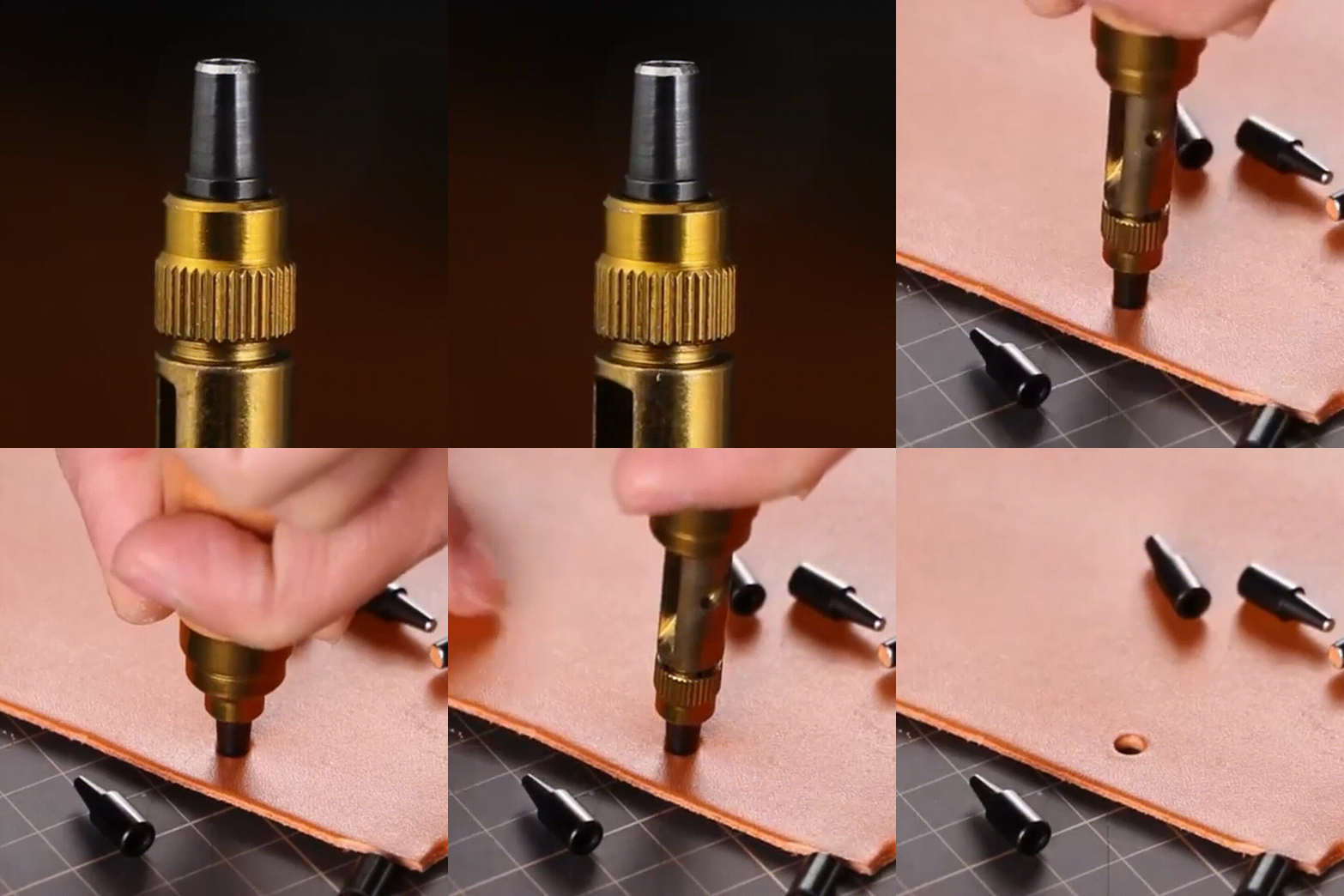
The Spring-Spin-Cut System
The Leathos Hole Puncher runs on that principle — a rotating mechanism that turns downward pressure into a cutting motion.
You put it on the leather. Press with your palm. No hammer, no impact.
- Separates fibers progressively around the hole instead of crushing them at once.
- Cleaner cuts mean less deformation and better stitch appearance.
- Palm-driven — reaches the middle of a panel, not just the edges.
- Circular geometry for clean, repeatable holes.
Same hands. Same practice. Different hole.

"Alright — what's the catch?"
 "Looks like a rebranded AliExpress tool."

Fair. One review stuck with us: "Not a scam… the product is amazing and after selling your first product, it's paid for." A leatherworker on Reddit, unprompted: "Feels smoother… works noticeably better." It's $49 with a 30-day refund.
 "I have arthritis — will it help?"

The most common reason people buy it. No hammer strikes, no squeeze-grip — just one downward press. We won't pretend it fixes arthritis. It removes the hammering and squeezing, which for a lot of sore hands was the part that ended the session early.
 "Will it go through thick leather?"

- Up to ~3mm (8oz): clean.
- Up to ~5mm (13oz): with a sharpened tip.
- Also fabric, BioThane, nylon.
- 16oz+ heavy leather: no — it jams. If that's most of your work, this isn't your tool.
Needs a cutting mat or firm backing under the work, not a bare tabletop.
 "Is it fiddly? Will it last?"

Switching tips takes a moment — a threaded system that keeps the tip aligned. Tips arrive with a working edge, not a razor edge; many hone them first (a sharpening file is included). Body is corrosion-resistant brass with a hardwood handle and steel punches. Worn tips replace on their own — 6 sizes, 1.5–4mm. Serviceable, not disposable.
Leathos Hole Puncher

Try it on your own leather
The Leathos Hole Puncher is $49, down from $69 — with 6 tips (1.5–4mm), three leatherwork ebooks, and a 30-day money-back guarantee.
The only test that matters: punch one hole with your current tool, one with this, and look at the edges side by side. Can't see the difference? Send it back within 30 days for a full refund. No forms, no argument.
It was never the leather, and it was never the practice. It was the tool.
Facebook testimonials
-

4w ago
This works great, I can't tell you how many belts I ruined using those damn hole pliers I even bent a pair trying to make a hole in my belt, totally worth it!
32
8 Comments
LikeCommentShare -

5d ago
Tell you what this dang thing has already saved me quite a bit of time
3
3 Comments
LikeCommentShare -

11w ago
This tool is wonderful. My wife bought one and showed it to a friend and her friend had to have one. That says a lot about the tool.
89
17 Comments
LikeCommentShare


